Converse University Hosts Third Annual Carolinas College Food Insecurity Summit

Written by Michelle Bowen
On Saturday, October 3, 2026, Converse University welcomed faculty, staff, and student leaders from 18 colleges across North and South Carolina for the third annual Carolinas College Food Insecurity Summit. The daylong gathering brought together higher education professionals, community organizations and student advocates to raise awareness of campus hunger, share successful approaches, and explore collaborative solutions to food insecurity.
At the University of South Carolina in Columbia (USC), campus studies showed that 48 percent of students experienced some form of food insecurity in 2025. “The data doesn’t lie,” says Dr. Scott Taylor, Jr., Associate Professor and Director of the International Institute of Foodservice Research and Education at USC. “But data alone doesn’t feed anyone.”
“Converse took action… resulting in the launch of Valkyrie Supply, a basic needs hub that offers supplemental support, free of charge.”
Taylor presented a roadmap for building an institution-wide infrastructure to address student hunger while also reducing food waste across campus. Drawing on USC’s experience, he shared actionable strategies other universities can adapt to their own campuses, along with lessons learned as the university developed its system of support.
Converse took action on its own campus data in 2023 by centralizing and strengthening its already existing resource efforts – ultimately resulting in the launch of Valkyrie Supply, a basic needs hub that offers supplemental support, free of charge. Attendees had an opportunity to tour Valkyrie Supply and discover how the space combines a food pantry with personal hygiene products and a career closet, bringing together all items in one location to best support students. This program is thriving at Converse, thanks to the support of the university community, local community partners, and gifts from alumni and donors.

Turning Surplus Into Support
Conference attendees explored how food recovery offers colleges a critical resource to address student hunger while reducing the amount of edible food that goes to waste. During the breakout session “Lowkey Feed Us More: From Centralized Pantries to Decentralized Food Recovery,” Jessie McNevin, Associate Director of the Office of Sustainability at USC, explored how campuses can build systems that make recovered food more accessible to students.
By recovering safe, surplus food from campus dining operations, events and other sources, institutions can redirect food that might otherwise be discarded to students who need.
“When students know what food resources are available, it cuts their food insecurity by half,” McNevin shared.
The message underscored the importance of both providing resources and ensuring students know how to find and use them. By recovering safe, surplus food from campus dining operations, events and other sources, institutions can redirect food that might otherwise be discarded to students who need it.
Equally important is the way colleges communicate these efforts. Building food recovery into everyday campus operations can “reframe the stigma to stewardship,” says McNevin, shifting the conversation in ways that empower students to be partners in campus efforts to reduce waste while gaining access to on-campus food resources.
Building a Network of Support
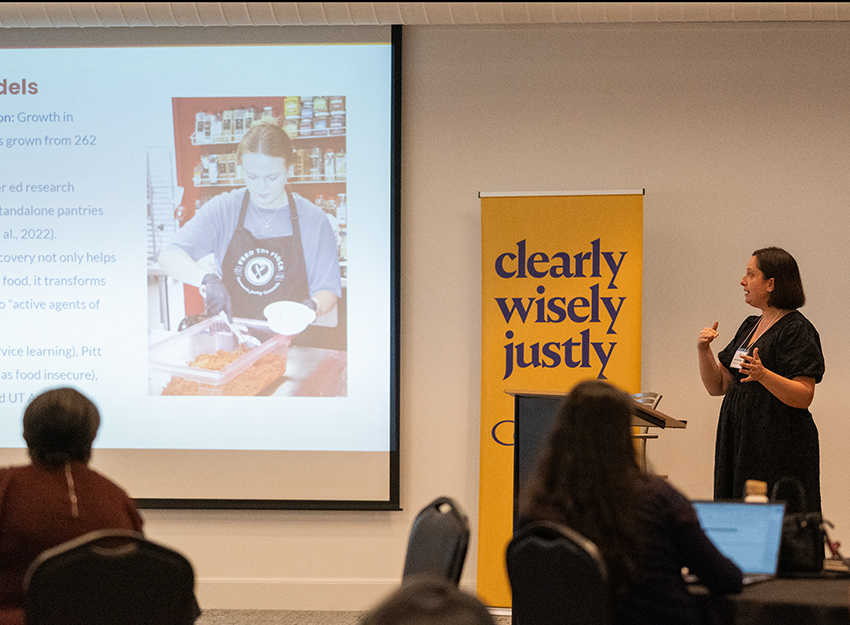
Food security initiatives can extend well beyond providing prepared meals. Equipping students with practical life skills, including grocery shopping, food preparation and proper food storage, can help them make the most of limited resources and support their long-term well-being.
“Access looks different whether you are an on-campus or off-campus student,” says Converse alumna Ashley Page Bookhart ’13, Director of Programs and Rural Outreach at FoodShare South Carolina.
Bookhart’s perspective highlighted the importance of engaging students as part of the process when building food pantry and recovery initiatives. Understanding the different circumstances students face when seeking food assistance helps campus advocates to build programs that meet students where they are.
Community organizations also play a vital role in expanding access to resources. Dr. Eliza Smith DeBevoise, Converse University Chaplain, Director of Community Engagement and Lecturer of Religious Studies, emphasized the potential of faith-based organizations to serve as partners in addressing college food insecurity.
“In SC alone, there are upwards of 9,000 faith-based organizations. In NC, that number is upwards of 16,000,” she says. “Seventy percent of people in the South identify with a faith-based organization or community. These are values-based organizations. Often, they can provide different streams of support. Think of these organizations as community centers.”
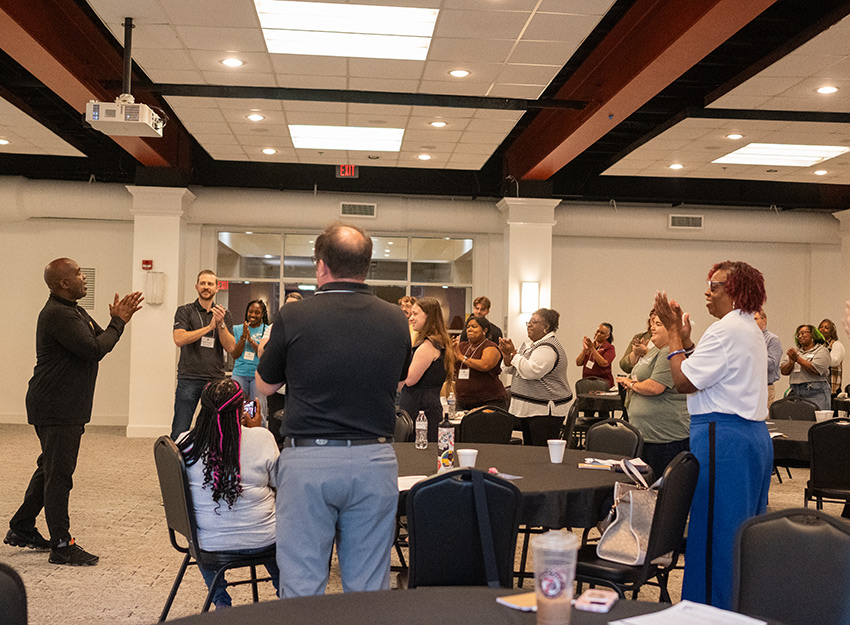
By connecting colleges with established community networks, universities can expand the resources available to students and create more comprehensive systems of support.
Turning Awareness Into Advocacy
Jamie Butler Alt, Advocacy and Communications Specialist at Feeding the Carolinas, delivered the keynote address, underscoring the scale of food insecurity across the Carolinas and the importance of policy advocacy in creating lasting change.
By connecting colleges with established community networks, universities can expand the resources available to students and create more comprehensive systems of support.
“Before I can help advocate for my food banks, I have to take a look at policies,” she said. “Hunger is a policy choice.”
Alt emphasized the powerful role students can play in shaping the policies and decisions that address food insecurity on their campuses and across the state. By sharing their own experiences, students who have faced food insecurity can help leaders better understand the barriers they and their peers encounter, inspiring solutions that make it easier for every student to access the food they need to thrive.
“Students, educators, and anti-hunger advocates are working together to educate legislators and find solutions that ensure everyone is fed,” she said
Connecting Campuses and Communities
As colleges across the Carolinas continue to confront student food insecurity, the summit offered an opportunity to move from awareness to action. Throughout the summit, community partners sponsored information tables and provided critical insights to highlight regional and local resources that address food insecurity.

Participating organizations included FoodShare Spartanburg (Ruth’s Gleanings), NC College Food Benefits, Georgia State FANS Conference, SC Thrive and Harvest Hope Food Bank.
Breakfast was generously provided by WJ Partners, LLC, owners of Eggs Up Grill, and lunch was provided in partnership with St. John’s Lutheran Church, Wade’s Restaurant, Jason’s Deli, and Holy Communion Lutheran Church, demonstrating the community support that helped make the summit possible.
Participants wrapped up the day with a letter-writing workshop focused on the role of communication in food security advocacy. The activity reinforced the importance of advocacy, outreach, and policy change in feeding students across the Carolinas.
“Think strategy!” said DeBevoise. “Get connected to leaders who care.”
By sharing resources and successful strategies, strengthening partnerships, and elevating student voices, participating colleges and community organizations continue to work toward a future in which fewer students have to choose between meeting their basic needs and pursuing their education.