Beyond the Stage: How a Conference Shaped My Future in Dance
Written by Rylie Budnick ‘26
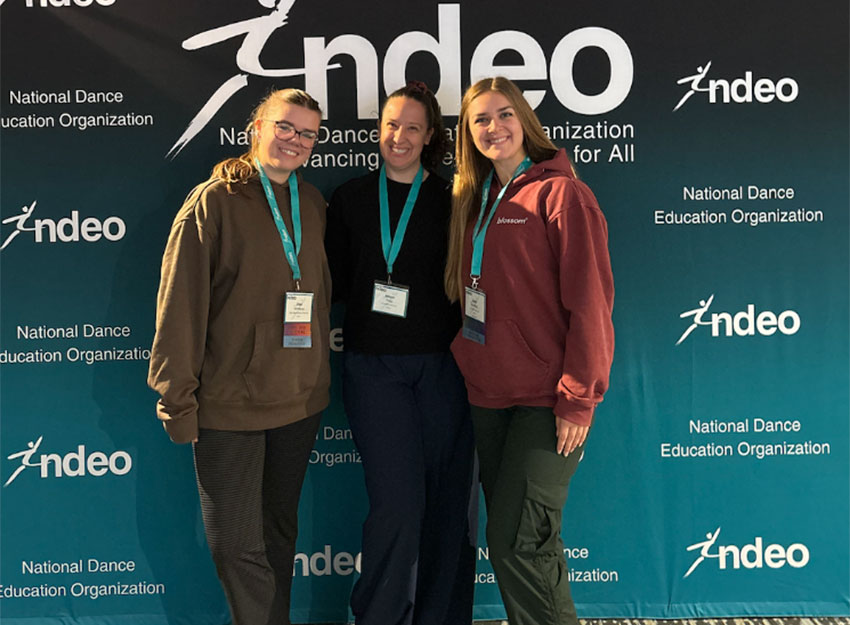
This October, I had the opportunity to present my dance research at the National Dance Education Organization (NDEO)’s Annual Conference in Detroit, Michigan. This is the largest conference for dance scholars and educators in the United States. NDEO partners with dance scholars and educators in all 50 states, the District of Columbia, and more than 25 other countries to promote dance educators in every setting and genre.
My research presentation, Choreographing Connection: How Psychological Processes Inform the Development of Choreographic Practice and Creative Outcomes in Dance, was featured alongside research from dance professors, professional choreographers, dance educators, and dance researchers from around the world. I found that attending NDEO was not only an opportunity to present my research but also a formative experience that connected me to other people’s research, perspectives, and communities across the nation.

From the perspective of a budding dance scholar, this conference was the exact place I was looking for when it came to sharing my and my co-presenter’s (Eliza McManus ‘25) dance research with the wider dance community.
After applying and being accepted to NDEO’s prestigious poster presentation event, Eliza and I received support from NDEO in preparing the poster and presentation for the conference in October. The process included attending many Zoom calls, receiving guidance from Professor Allison Roux, and applying for funding from Converse, which allowed Eliza and me to present at the conference successfully. Weeks before I arrived at the conference, I asked Professor Roux what I would experience, and she assured me that I would enjoy everything I attended, and her assurance was true.
After a long day of absorbing information at the conference, it was time to present our poster. Dance educators, scholars, and everyone in between approached our poster with curiosity and willingness to learn, encouraging us to dive deeper into our topics and share our choreographic processes. As the event progressed, Eliza and I networked with dozens of people, and some of our conversations led to our research being documented and distributed to dance educators’ classrooms across the nation. During this event, Eliza and I were approached by a well-known dance publisher who invited us to write a column for Dance Education in Practice, detailing the dance research we presented at the conference. Our column is scheduled for publication in the March 2026 volume of the journal, making our research accessible to the wider dance community.
“Eliza and I networked with dozens of people, and some of our conversations led to our research being documented and distributed to dance educators’ classrooms across the nation.”
Rylie Budnick ‘26
The research Eliza and I presented was about psychological concepts and how the research we did informed our choreographic processes, dancer reactions, and overall piece outcome. In a nutshell, we researched theories from psychology that we thought could be translated into movement and used a practice-as-research methodology to determine if we were able to successfully create a piece while keeping our dancers engaged in the choreographic process. We found that including our dancers in choreographic processes, such as text-to-movement translation and Circle-Dive-Circle-Share, caused them to be more emotionally engaged and have a better understanding of what the piece was actually about.
Alongside the engaging conversations and exciting outcomes of the poster presentation event, Eliza and I also attended classes and research presentations led by dance experts from across the country. I was able to attend panels and take movement classes on jazz dance, improvisation, dancer health, graduate school applications, and more. For Eliza, her experience consisted of panels and workshops that pertained to her role as an elementary school dance teacher. She learned new and creative methods to increase student engagement, learning, and interaction in an academic setting.
In my experience, one of the most interesting panels of the weekend explored the origins of dance styles like jazz and hip hop and how they fit into the greater scope of Black American dance history. Another panel I attended focused on applying to dance graduate schools, and the panelists discussed how to cultivate a compelling graduate school application and what to expect once you’re in graduate school. The variety of classes exposed Eliza and me to new ideas, choreography, and research that we wouldn’t have otherwise encountered in South Carolina alone.
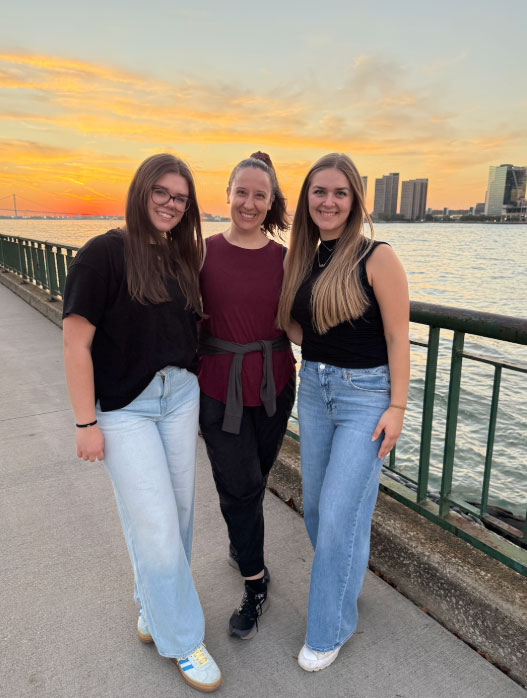
After conference hours, Eliza and I were able to explore downtown Detroit. We used our time to dine out at local restaurants and peruse the downtown area, but the highlight of our after-hours travels was definitely going to Canada. This was our first time going to Canada (and Eliza’s first time out of the country), and having our professor there to see another country with us made the experience that much more exciting. While in Canada, we visited local stores and restaurants and walked along the Canadian riverwalk.
“The connections I made are serving me now and will continue to serve me once I graduate in the spring.”
Rylie Budnick ‘26
This NDEO Conference experience opened my eyes to the world of possibilities in dance choreography, research methodologies, and careers beyond my undergraduate involvement. The connections I made are serving me now and will continue to serve me once I graduate in the spring, too. Looking to the future, my goals are to present research at more conferences, attend more educational dance events, and get into graduate school for dance. This fall, I am applying to several MFA programs across the country to continue my journey as a dance choreographer, scholar, and hopefully, professor.
My advice to current and future Converse students is to take the risk and apply to conferences like NDEO, because you never know where it will take you. The Converse dance program has everything you need to succeed, and the professors are there to make sure you excel beyond the classroom and into your future career.
Rylie Budnick ‘26 is a double major in Dance and Business Administration at Converse University.